


General Information
Macro-feeding elements in maize

Nitrogen (N)
- Young plants deficient in nitrogen usually appear light yellow-green.
- In older plants., a yellowish upside-down V is characteristic of a nitrogen deficiency.
- The cob is typically not full of kernels, resulting in a sharp end.

Phosphate (P)
- Where phosphate (P) levels in the ground are very low, leaves- and especially the edges- take on a characteristic purple colour.
- Phosphate deficiency is usually detected in young plants.
- Over wet and cold conditions can also give young plants a purple colour. Known as anthocianyne.

Potassium (K)
- Potassium (K) deficiency is seen in older plants where the leaves have thin yellow edges. In some cases, the edges die off.
- Potassium (K) deficiency is usually seen in old leaves, usually towards the bottom of the plant. Cobs are not filled with kernels and have a shriveled look.

Magnesium (Mg)
- Magnesium (Mg) deficiency results in light yellow lines down the bottom leaves which later turn into dead spots that resemble beads.
- Magnesium (Mg) deficiency is usually a problem in acidic soil.
- Too much potassium can induce a magnesium shortage and make light green lines on the leaves.

Sulphur (Mg)
- A shortage of sulphur will cause a light yellowish-green colour in young plants.
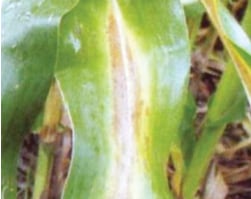
Nitrogen (N)
- Young plants deficient in nitrogen usually appear light yellow-green.
- In older plants., a yellowish upside-down V is characteristic of a nitrogen deficiency.
- The cob is typically not full of kernels, resulting in a sharp end.